Deciding to elope can feel so liberating! You are deciding to do what’s best to you, which is a complete win! But now that you’re not following a traditional wedding timeline, there’s no blueprint for planning. The good news is there’s only one set of rules that you really need to follow: Washington elopement laws.
It can feel a bit overwhelming to research, so I did it for you! All the information you need to make sure your elopement is a legal marriage in Washington state is below.

I’m Allison, your Washington elopement photographer, planner, and Washington elopement laws expert.
As a Type-A over-thinker with a love for epic landscapes and a background in project management, it’s my goal to create a stress-free elopement planning process for my couples. Getting married is a big enough deal on its own. You shouldn’t have to stress about location scouting, timeline creation, permit requirements, and marriage license timing. I take the guess-work out of it all, so you can actually enjoy your elopement planning process. All that on top of those jaw-dropping photos you’ll be showing off for a lifetime.
Here’s the basics to Washington elopement laws:
1. Get your marriage license
2. Have your ceremony
3. Return the license
1. Get your marriage license.
The nice thing about Washington state is that you can get your marriage license in any county. You don’t need to be a resident of the county (or the state for that matter), and you don’t need to have your ceremony in that county either. You just need to be able to apply for the license and return it after the ceremony.
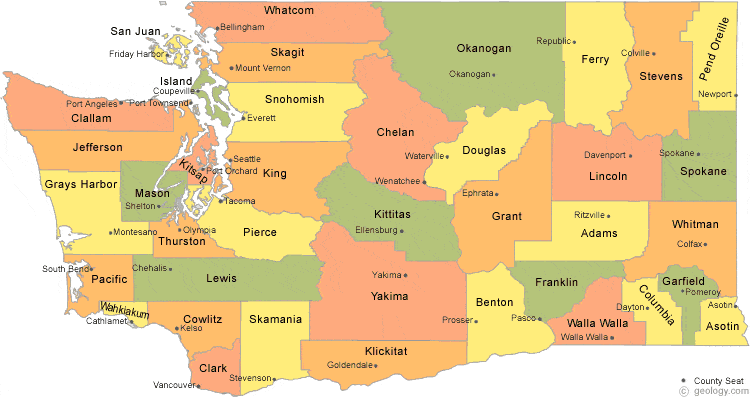
If you live in Washington, you can use the county you live in. If you’re traveling, here are some of the most convenient counties to obtain your marriage license:
- King county: Sea-Tac airport & Seattle
- Pierce county: Tacoma
- Spokane county: Spokane
- Whatcom county: Bellingham
- Chelan county: Wenatchee
- Clark county: Vancouver
- Clallam county: Port Angeles
All you need to do to get your license is apply (online, by mail or in person), pay the county fee, and wait the 3-day period.

Depending on where you decide to hold the ceremony (in a National Park, State Park, National Forest or other protected area) you’ll likely need a Special Use Permit in addition to your wedding license. It’s best to request those as early in as you can manage! Don’t worry, I can help you with those too.
2. Have your ceremony.
You don’t need to have the ceremony in the same county as you applied for your license, so anywhere in the state is fair game! The biggest pain here is that 3-day waiting period. This means you have to wait a full three days from the time you get your license to have the ceremony. If you want to have your ceremony on Friday, for example, you’ll need to get your license by the previous Tuesday. Washington elopement laws require you to have your ceremony within 60 days of getting your license.
Besides timing, there are other requirements to make your ceremony legally legit.
The ceremony can be performed by:
- Supreme Court, Court of Appeals, or Superior CourtJustices and Commissioners
- Judges and Commissioners of courts of limited jurisdiction
- Judges of tribal courts from a federally recognized tribe
- Licensed or ordained ministers or priests of any church or denomination
That last bullet point is key – it means anyone ordained can marry you, including a friend, family member, or even me! I can sign your paperwork for you if you’re trying to keep your numbers down (I’m ordained through the Universal Life Church).
The last requirement of Washington elopement laws is to have two witnesses sign your marriage certificate. This is easy to accomplish, even if your big day is just the two of you and an officiant. Most people are happy to sign as a witness, even if they don’t know you. So you could find two people on your hike, the parking lot, at the ranger station, or anywhere else you’ll go to sign for you. If you are including guests, you can have two of them sign.
3. Return the license.
After you two, the officiant and two witnesses sign, all that’s left to do is to return it to the same county you got your license from within 60 days. And voila, you’re married!

That’s it!
It’s actually pretty simple, right? So don’t sweat! If you fall in love with a location for a special ceremony somewhere in a state that doesn’t have ideal parameters for you, you can always wed at your local courthouse prior to doing your unique ceremony.
You don’t have to let complex Washington elopement laws overwhelm you or dull your dream elopement! There are always ways to make your vision work – you just need people in your corner to support you. And hey, that’s me!
Starting to plan your elopement but don’t know where to begin?
When you decide to ditch the traditional wedding and get married in a way that feels right to you, there’s no longer a clear “how-to” guide to follow. Let me help answer some of your biggest questions and give you resources to help you make the best decision for you. Learn how to plan a Washington elopement here.
Deciding to elope can feel so liberating! You are deciding to do what’s best to you, which is a complete win! But now that you’re not following a traditional wedding timeline, there’s no blueprint for planning. The good news is there’s only one set of rules that you really need to follow: Washington elopement laws.
It can feel a bit overwhelming to research, so I did it for you! All the information you need to make sure your elopement is a legal marriage in Washington state is below.

I’m Allison, your Washington elopement photographer, planner, and Washington elopement laws expert.
As a Type-A over-thinker with a love for epic landscapes and a background in project management, it’s my goal to create a stress-free elopement planning process for my couples. Getting married is a big enough deal on its own. You shouldn’t have to stress about location scouting, timeline creation, permit requirements, and marriage license timing. I take the guess-work out of it all, so you can actually enjoy your elopement planning process. All that on top of those jaw-dropping photos you’ll be showing off for a lifetime.
Here’s the basics to Washington elopement laws:
1. Get your marriage license
2. Have your ceremony
3. Return the license

1. Get your marriage license.
The nice thing about Washington state is that you can get your marriage license in any county. You don’t need to be a resident of the county (or the state for that matter), and you don’t need to have your ceremony in that county either. You just need to be able to apply for the license and return it after the ceremony.

If you live in Washington, you can use the county you live in. If you’re traveling, here are some of the most convenient counties to obtain your marriage license:
- King county: Sea-Tac airport & Seattle
- Pierce county: Tacoma
- Spokane county: Spokane
- Whatcom county: Bellingham
- Chelan county: Wenatchee
- Clark county: Vancouver
- Clallam county: Port Angeles
All you need to do to get your license is apply (online, by mail or in person), pay the county fee, and wait the 3-day period.

Depending on where you decide to hold the ceremony (in a National Park, State Park, National Forest or other protected area) you’ll likely need a Special Use Permit in addition to your wedding license. It’s best to request those as early in as you can manage! Don’t worry, I can help you with those too.
2. Have your ceremony.
You don’t need to have the ceremony in the same county as you applied for your license, so anywhere in the state is fair game! The biggest pain here is that 3-day waiting period. This means you have to wait a full three days from the time you get your license to have the ceremony. If you want to have your ceremony on Friday, for example, you’ll need to get your license by the previous Tuesday. Washington elopement laws require you to have your ceremony within 60 days of getting your license.
Besides timing, there are other requirements to make your ceremony legally legit.

The ceremony can be performed by:
- Supreme Court, Court of Appeals, or Superior CourtJustices and Commissioners
- Judges and Commissioners of courts of limited jurisdiction
- Judges of tribal courts from a federally recognized tribe
- Licensed or ordained ministers or priests of any church or denomination
That last bullet point is key – it means anyone ordained can marry you, including a friend, family member, or even me! I can sign your paperwork for you if you’re trying to keep your numbers down (I’m ordained through the Universal Life Church).
The last requirement of Washington elopement laws is to have two witnesses sign your marriage certificate. This is easy to accomplish, even if your big day is just the two of you and an officiant. Most people are happy to sign as a witness, even if they don’t know you. So you could find two people on your hike, the parking lot, at the ranger station, or anywhere else you’ll go to sign for you. If you are including guests, you can have two of them sign.

3. Return the license.
After you two, the officiant and two witnesses sign, all that’s left to do is to return it to the same county you got your license from within 60 days. And voila, you’re married!

That’s it!
It’s actually pretty simple, right? So don’t sweat! If you fall in love with a location for a special ceremony somewhere in a state that doesn’t have ideal parameters for you, you can always wed at your local courthouse prior to doing your unique ceremony.
You don’t have to let complex Washington elopement laws overwhelm you or dull your dream elopement! There are always ways to make your vision work – you just need people in your corner to support you. And hey, that’s me!
Starting to plan your elopement but don’t know where to begin?
When you decide to ditch the traditional wedding and get married in a way that feels right to you, there’s no longer a clear “how-to” guide to follow. Let me help answer some of your biggest questions and give you resources to help you make the best decision for you. Learn how to plan a Washington elopement here.